
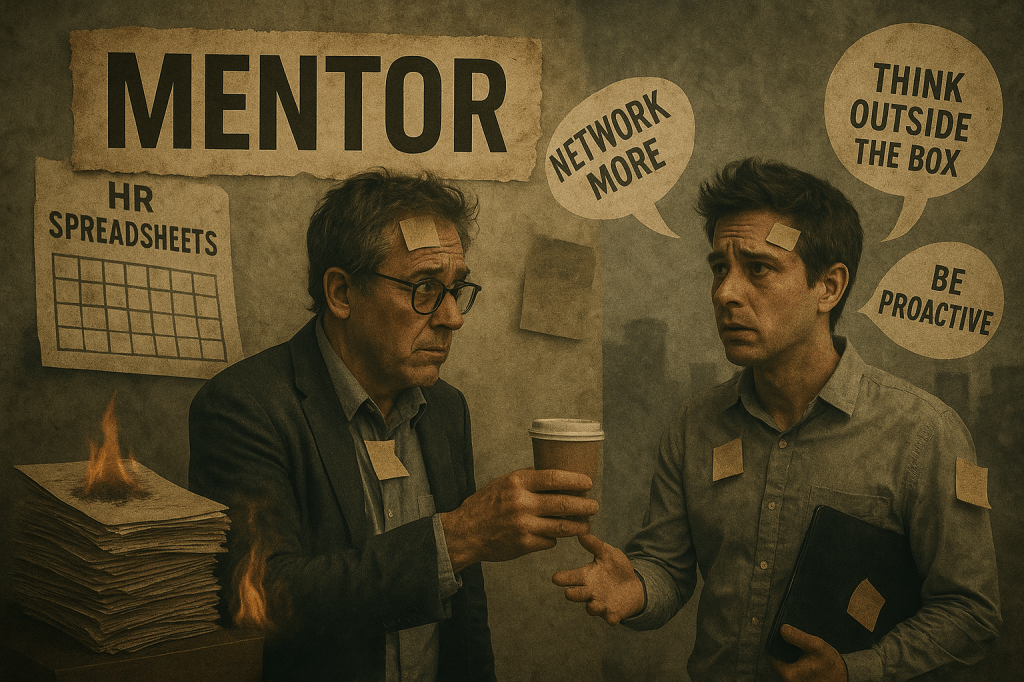
You know mentorship programs. The glossy emails, the HR pep talks, the quarterly check-ins where someone you barely know pretends to care about your career trajectory. They promise wisdom, guidance, growth. What you actually get is… awkward Zoom calls, vague advice about “networking more,” and a lifetime subscription to PowerPoint slides no one asked for.
“Mentor.” Just typing it makes my stomach turn. Not because mentoring is bad — it isn’t. Done right, it can change careers, even lives. It did mine. Not a system, not a checkbox, not some HR program. When I started out, I was mentored — by line managers, technologists, creatives, strategists, and yes, sometimes even clients (the good ones). Real mentorship was messy, human, and utterly unglamorous. It came from watching, listening, asking questions, and stealing the best from everyone around you.
Think About It.
Here’s the problem: mentorship programs fail because we treat them like vending machines. Insert talent, press a few buttons, and out comes wisdom. Except talent isn’t a coin, advice isn’t a snack, and you can’t just shake the machine when it jams.
Mentorship only works when ego is dialled down — both sides. The mentor must aim to train someone to be better than themselves, to recognise that the mentee may one day surpass them. The mentee, in turn, has to acknowledge their deficiencies without defensiveness or performative posture. Neither is easy — humans are wired with ego, pride, and self-preservation instincts. This is why real mentorship is so rare in organisations.
Watching the Smoke.
Agencies and businesses expect 80–90% utilisation. Reality? You’re running at 110–120%, juggling clients, pitches, and internal nonsense. Suddenly someone tells you to add “mentorship program participation” on top. Mentors are just as overworked. HR and L&D governance rarely guides them or takes feedback seriously. You’re left acting as an ops director or Director of People and Culture — way above your pay grade. And if you don’t do it “well”? You’re not a team player. Your career stalls. All for a program designed to tick boxes, look virtuous, and save money.
Good mentorship also recognises mutual learning. Mentors should expect to learn from their mentees, because insight can flow both ways. There is no single approach that works; it must be tailored to the learning requirements of the mentee. It demands both didacticism — structured guidance — and autodidacticism — self-directed discovery. Most orgs lack either, which is why so many programs collapse.
The Weaponised Mentee.
And then there’s the mentees. Some keep meticulous notes for review season: “I asked, you never guided me.” Others use mentorship to signal diligence, safeguard status, or shield themselves from criticism. I’ve seen both. Hell, I’ve had both. It’s performative, exhausting, and leaves a sour taste. But underneath all the posturing, I empathise — everyone is trying to survive in a system that doesn’t give anyone time to breathe.
Before Mentorship Was a Checkbox.
When I started out, you didn’t need a program. You watched, listened, learned. You took the best from different people, from different subjects, and you got off yer arse. Real leaders mentor naturally — you absorb, pass it on, act. No HR checklist, no glossy folder, no LinkedIn headline. That’s how growth actually happened.
Mentorship isn’t awards, recognition, or LinkedIn likes. It’s guiding, nudging, failing, and listening. It’s messy, chaotic, and human — and it only works if ego is shelved, curiosity is genuine, and both parties are willing to learn from each other. If you’re doing it for ego, cost-cutting, or safety, skip it. If you’re doing it for impact, buckle up. Feel it, live it, do it — or don’t pretend.
– Tom Kite.
 Everyone’s talking shite. I’m just breathing it in.
Leave a comment